 Before
 After

Explore Treatments
Explore by Concern
About Bavary Clinic
Learn more about our team, our approach to care and the story behind our London and Sligo clinics.
Skin / Face Treatments
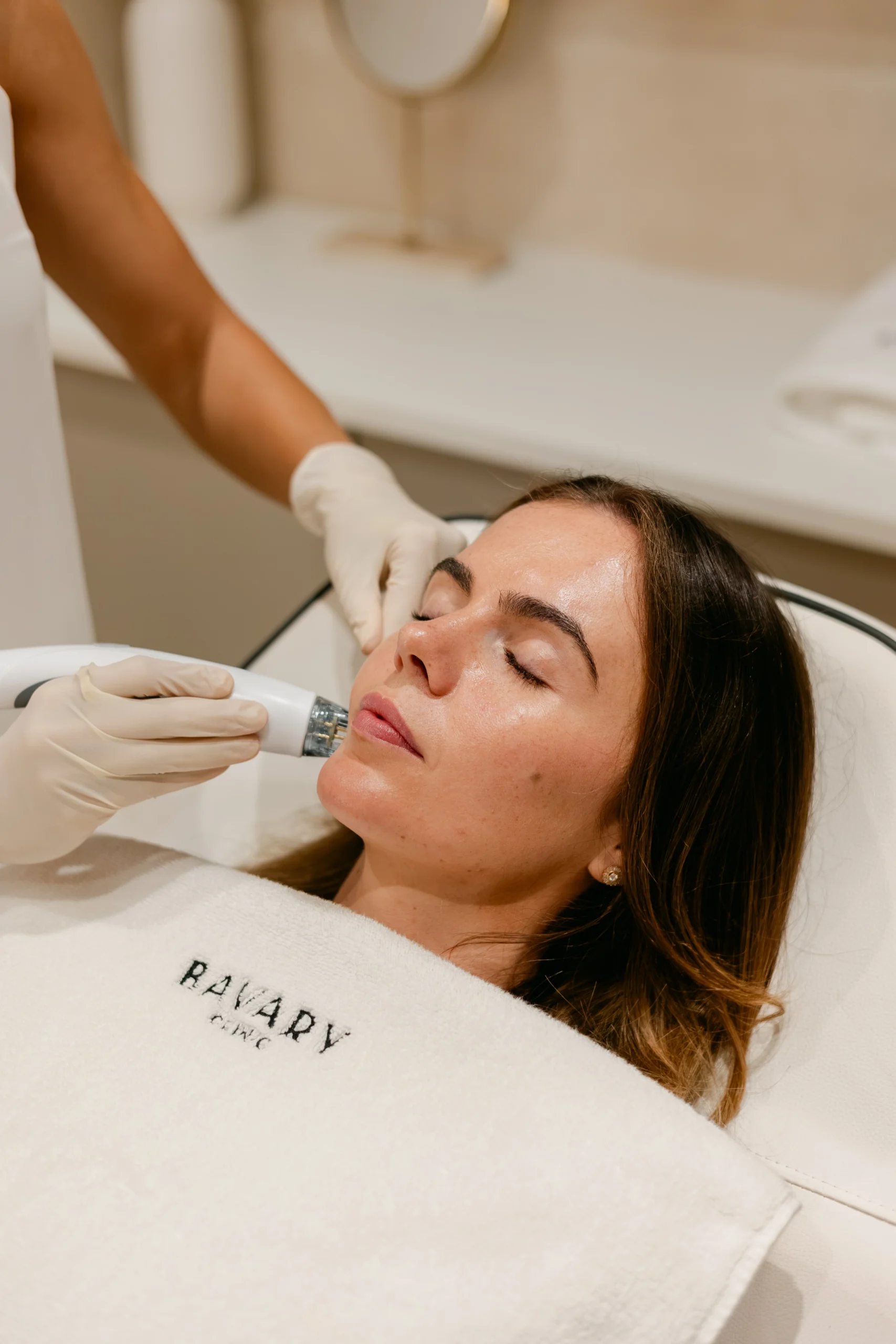
Radiofrequency microneedling combines controlled needle penetration with precisely delivered thermal energy. Our treatment options consider texture, selected scars and skin firmness, with scar release, PRP or other adjuncts discussed only where they add a clear and suitable purpose.
Radiofrequency microneedling combines fine needles with RF energy delivered into the skin to support collagen remodelling. It may be considered for selected acne scars, uneven texture, fine lines and mild laxity. Bavary Clinic offers RF Microneedling, RF Microneedling with PRP & Subcision and RF Microneedling with Exosomes.
These procedures differ in purpose and complexity; subcision, for example, may be considered for tethered scars rather than general texture concerns. Your practitioner reviews scar pattern, skin tone, medical history and recovery expectations before recommending treatment. Available at our Harrow, London and Sligo, Ireland clinics.
BeforeAfter Before
 After
 Before
 After
 Before
 After
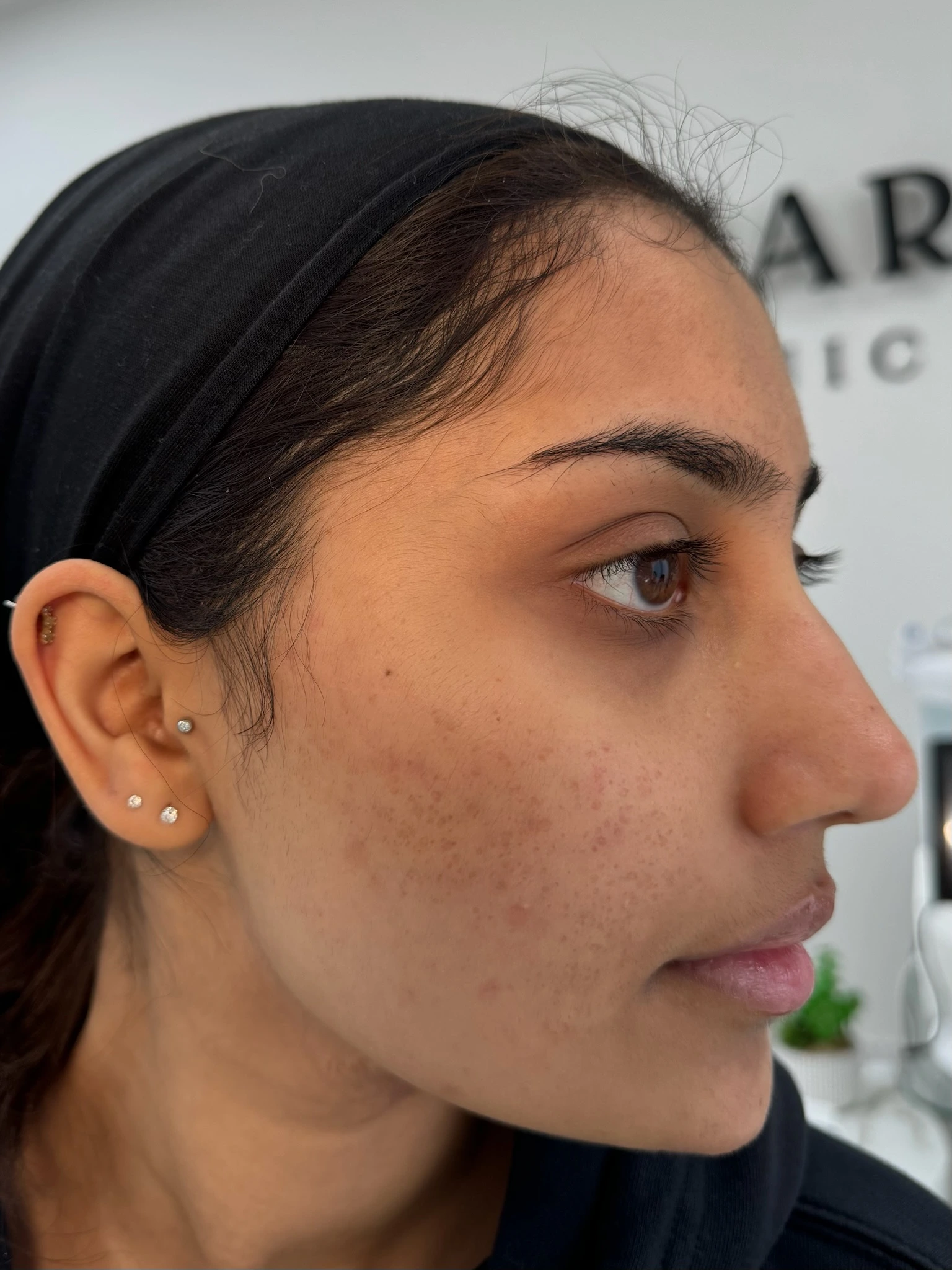
Results vary between individuals. Images should only be used with informed patient consent and accurately represent the treatment course and timeframe.
Explore the clinical considerations, preparation, results and recovery associated with rf microneedling.
We evaluate skin thickness, scar type, pigmentation risk, previous treatments and medical factors that affect energy-based procedures. The proposed device-specific precautions, skincare adjustments, anaesthesia choices and any additional subcision or PRP steps are discussed. RF energy is delivered using the clinical settings selected for the assessed tissue; any separate scar-release or adjunct step is explained before consent.
The appointment is guided by your specific concern, and the practitioner should discuss what will and will not be achieved. Results develop gradually; we assess tissue response and whether further treatment would be worthwhile before planning another session.
Conventional microneedling causes a mechanical micro-injury. RF microneedling adds radiofrequency energy delivered through needle electrodes into selected tissue depths, generating controlled local heating. The combination can influence dermal remodelling, but the exact effect depends on the device, needle insulation, energy settings, treatment density and anatomy.
It is inaccurate to assume that every RF platform behaves in the same way or that more heat necessarily produces better cosmetic outcomes. RF microneedling is an invasive energy-based medical procedure. In October 2025, the FDA warned of reports of burns, scarring, fat loss, disfigurement and nerve injury with certain uses of these devices.
The decision begins with a review of your medical history, prior reactions, treatment aims and the condition of the area being considered. Pregnancy, active infection, open skin, significant inflammatory disease, certain implanted electronic devices or metals depending on device guidance, impaired healing and relevant medication histories may preclude or postpone treatment.
A history of pigmentation change, facial volume concerns or prior energy-based procedures requires added caution. Subcision and adjunctive products carry their own risks. If the likely benefit does not justify the risks or another condition should be addressed first, postponement or an alternative can be recommended.
Skin thickness, facial volume and history of pigment change are particularly relevant to an energy-based needling procedure. Darker phototypes may face post-inflammatory hyperpigmentation after prolonged inflammation, while thin or volume-sensitive areas deserve extra care because unwanted fat loss has been reported.
The exact RF device, settings and treatment area matter more than a generic claim of suitability for all skin types. The practitioner should explain why the chosen protocol is appropriate for your individual tissue and history, rather than rely on a broad promise of universal suitability.
The concerns we may discuss include acne scarring, rolling acne scars, uneven skin texture, fine lines, enlarged pores, selected skin laxity and scar tethering. Rolling scars can be associated with fibrous attachments that pull the surface down.
Subcision is a mechanical release technique aimed at selected tethered scars. RF microneedling may be considered for surrounding texture and remodelling, but it does not itself guarantee release of a deep tether. Ice-pick, sharply edged boxcar and hypertrophic scars present different problems.
Each pattern deserves its own assessment rather than a universal full-face treatment promise. Not every listed concern is an indication for every option in the group, and an appropriate outcome depends on identifying the actual cause.
RF microneedling can produce needling pressure and heat or prickling sensations, with comfort measures selected by the practitioner. A subcision component may add localised discomfort and bruising, and PRP includes blood sampling. The combination should not be considered a routine facial.
Severe pain during energy delivery or unusual post-treatment symptoms must be assessed promptly. Comfort measures and any unexpected symptoms should be explained before treatment so that you know what is normal and when to speak up.
The proposed device-specific precautions, skincare adjustments, anaesthesia choices and any additional subcision or PRP steps are discussed. Pregnancy, active infection, open skin, significant inflammatory disease, certain implanted electronic devices or metals depending on device guidance, impaired healing and relevant medication histories may preclude or postpone treatment.
A history of pigmentation change, facial volume concerns or prior energy-based procedures requires added caution. Subcision and adjunctive products carry their own risks. Tell your practitioner about pregnancy where relevant, prescriptions, supplements, recent procedures and any change in your health. Do not stop prescribed medicines without advice from the relevant prescriber.
Temporary redness, swelling, tenderness or pinpoint bleeding can occur. Subcision may add bruising or local swelling, while energy delivery introduces risks of burns and more prolonged inflammation. Rare but serious injuries have been reported after certain RF procedures.
Aftercare includes skin protection and clear advice about escalating pain, unusual colour change or delayed healing. The practitioner will outline the response expected after your particular option, since treatments within one group may have very different healing profiles.
Aftercare covers inflammation, skin protection, bruising or swelling and signs of thermal injury or infection that require prompt review. Temporary redness, swelling, tenderness or pinpoint bleeding can occur. Subcision may add bruising or local swelling, while energy delivery introduces risks of burns and more prolonged inflammation.
Rare but serious injuries have been reported after certain RF procedures. Aftercare includes skin protection and clear advice about escalating pain, unusual colour change or delayed healing. Please contact the clinic if symptoms are more severe or last longer than the plan explained at consultation; urgent symptoms should be assessed without delay.
Collagen-related changes can evolve over weeks and months, and not every scar will be erased. A release of an appropriate tether may change the contour of one scar while the surrounding tissue remodels at a different rate.
Claims of instant tightening can confuse temporary swelling with lasting improvement. Fat loss, scarring and unwanted pigment change are possible adverse outcomes, not signs of successful treatment. An individual assessment can help distinguish meaningful change from temporary swelling or surface effects.
Treatment number and interval depend on the device, scar pattern, energy intensity and response. It is not clinically sound to schedule repeated high-energy sessions simply because a fixed package is available.
The healing response and possibility of thermal injury should be reassessed before further treatment, especially after subcision or when adjuncts are used. Where a course price is offered, that is an optional booking structure rather than a promise of suitability or guaranteed results.
Pregnancy, active infection, open skin, significant inflammatory disease, certain implanted electronic devices or metals depending on device guidance, impaired healing and relevant medication histories may preclude or postpone treatment. A history of pigmentation change, facial volume concerns or prior energy-based procedures requires added caution.
Subcision and adjunctive products carry their own risks. RF microneedling is an invasive energy-based medical procedure. In October 2025, the FDA warned of reports of burns, scarring, fat loss, disfigurement and nerve injury with certain uses of these devices.
Risks differ by formulation, treatment area, operator technique and medical history. The practitioner should identify the specific risks most relevant to you and discuss alternatives before consent.
Conventional microneedling avoids RF thermal injury and may be more suitable for selected shallow textural concerns. Subcision alone or another scar-specific technique may address tethering more directly. Fractional laser resurfacing can be considered for selected scars but has distinct recovery and pigment risk.
A medical acne plan is important if inflammatory lesions remain active. The best alternative may also be to delay a procedure while a skin, scalp or medical condition is properly investigated.
Collagen-related changes can evolve over weeks and months, and not every scar will be erased. A release of an appropriate tether may change the contour of one scar while the surrounding tissue remodels at a different rate.
Claims of instant tightening can confuse temporary swelling with lasting improvement. Fat loss, scarring and unwanted pigment change are possible adverse outcomes, not signs of successful treatment. RF microneedling is an invasive energy-based medical procedure.
In October 2025, the FDA warned of reports of burns, scarring, fat loss, disfigurement and nerve injury with certain uses of these devices. Some concerns require a different modality, longer-term management or medical referral, and not every desired change is achievable through an aesthetic treatment.
A considered guide to the science, available options, realistic outcomes and clinical decisions behind rf microneedling.
Conventional microneedling causes a mechanical micro-injury. RF microneedling adds radiofrequency energy delivered through needle electrodes into selected tissue depths, generating controlled local heating.
The combination can influence dermal remodelling, but the exact effect depends on the device, needle insulation, energy settings, treatment density and anatomy. It is inaccurate to assume that every RF platform behaves in the same way or that more heat necessarily produces better cosmetic outcomes.
Rolling scars can be associated with fibrous attachments that pull the surface down. Subcision is a mechanical release technique aimed at selected tethered scars.
RF microneedling may be considered for surrounding texture and remodelling, but it does not itself guarantee release of a deep tether. Ice-pick, sharply edged boxcar and hypertrophic scars present different problems. Each pattern deserves its own assessment rather than a universal full-face treatment promise.
PRP is produced from the patient’s blood and contains concentrated platelets. It has been investigated alongside several skin procedures, but methods of preparation and clinical studies vary.
Combining it with RF microneedling and subcision does not automatically make the plan superior or suitable for every patient. The additional blood draw, preparation, injection or application route and expected incremental benefit should be explained separately.
Exosomes are extracellular vesicles involved in cellular communication and remain an active research area. Products vary markedly in source and composition, and clinical outcomes from one preparation cannot be generalised to another.
Applying a product after a barrier-disrupting procedure raises different questions from ordinary cosmetic application. The exact formulation, product status, route and safety data require confirmation before a claim about enhanced recovery or regeneration is made.
In 2025, the US Food and Drug Administration reported serious complications associated with certain RF microneedling uses, including burns, scars, unwanted fat loss, disfigurement and nerve injury. This is particularly relevant around naturally thin or volume-sensitive tissue.
The warning does not mean every procedure causes injury, but it is a reason to ask about practitioner training, device selection, treatment parameters and clinical arrangements for managing complications.
All skin tones need assessment. People prone to post-inflammatory hyperpigmentation may develop dark marks after extended inflammation, whereas people with very thin skin may have different concerns about depth or energy.
Active acne, recent sun exposure, sensitivity and previous energy-based treatments can change the plan. Conservative technique and appropriate intervals matter, and treatment may need to be postponed rather than forced into a predetermined course.
Redness, swelling, tenderness, pinpoint bleeding or bruising may occur; subcision can add more noticeable bruising. Some changes are immediate inflammatory responses, not lasting collagen improvement.
Meaningful texture changes generally develop over weeks to months, and scars may remain visible after treatment. Overly aggressive or repeated treatment can cause harm rather than accelerate improvement.
Superficial peels mainly target selected surface concerns. Conventional microneedling relies on mechanical micro-injury, while fractional CO₂ laser creates a different type of thermal resurfacing injury with its own recovery and pigment risks.
RF microneedling occupies a distinct role rather than automatically replacing any of these methods. The most appropriate approach depends on the primary concern, scar morphology, skin tone, existing volume and the patient’s tolerance for downtime.
Our menu includes RF Microneedling; RF Microneedling with PRP & Subcision; RF Microneedling with Exosomes. A choice between these offerings should be made according to the concern, underlying anatomy, skin or scalp condition and the evidence for the actual procedure, rather than the assumption that the more expensive option is necessarily more effective.
In particular, the intended purpose of an adjunct or a branded product should be explained separately from the main procedure. You should understand exactly what is included in an appointment, whether a course is recommended and how the practitioner would judge whether treatment is helping. Treatment prices and course options are stated separately in the menu, but the choice to proceed, timing and any repeat sessions remain subject to clinical suitability.
At consultation, it is useful to explain which change matters most to you, what you have already tried and how much recovery you can accommodate. Concerns such as acne scarring; rolling acne scars; uneven skin texture; fine lines; enlarged pores are related but do not necessarily have the same underlying cause.
Ask why the proposed option is preferable to an alternative, what a realistic improvement would look like for your individual situation, and which changes are unlikely. Also discuss any medications, skin or scalp conditions, allergies, previous procedures and history of pigmentation or poor healing. A confident recommendation should include circumstances in which the treatment would be delayed or declined.
RF microneedling is an invasive energy-based medical procedure. In October 2025, the FDA warned of reports of burns, scarring, fat loss, disfigurement and nerve injury with certain uses of these devices. Pregnancy, active infection, open skin, significant inflammatory disease, certain implanted electronic devices or metals depending on device guidance, impaired healing and relevant medication histories may preclude or postpone treatment. A history of pigmentation change, facial volume concerns or prior energy-based procedures requires added caution. Subcision and adjunctive products carry their own risks.
A published study of a device or ingredient does not necessarily establish the same results for every product, protocol, skin type or anatomical area. Where treatment is appropriate, the practitioner should explain the expected sequence of recovery, how to care for the treated area and what signs merit prompt medical review. Outcomes vary and may need time to become clear. Further appointments should be based on the observed response and an updated assessment rather than a guarantee that a particular number of sessions will deliver a fixed result.
Suitability depends on your individual concerns, medical history and the treatment being considered.

Acne scars can be shallow, sharply defined, rolling, raised or mixed. Identifying the scar type and whether acne is still active is essential…

Visible pores and uneven texture can reflect oil production, follicular structure, scarring, photodamage or dehydration. Treatment should target the underlying pattern rather than…

Lines can arise from repeated facial movement, sun exposure, collagen and elastin change, dehydration and facial structure. Distinguishing movement-related lines from lines present…

Loss of firmness reflects changes in collagen, elastin and deeper facial support. The degree of laxity matters because skin-quality treatments cannot reproduce the…

Stretch marks and scars represent changes within the dermis rather than surface dryness alone. Their age, colour, thickness and cause affect what treatment…
The Bavary Approach™
“Energy-based treatment calls for precision, not excess.”
RF microneedling requires greater judgement than selecting a treatment depth from a standard menu. Our experienced practitioners consider scar morphology, local anatomy, skin thickness, pigmentation history and the potential effects of energy delivery before deciding whether treatment is appropriate.
If subcision is being discussed, we assess whether scars are genuinely tethered; if PRP or an exosome-labelled product is proposed, its distinct purpose and evidence are considered. Risks such as burns, prolonged inflammation, fat loss and scarring deserve a clear explanation. A responsible recommendation may favour conventional microneedling, another scar-directed technique or no intervention.
Our priority is a proportionate plan that respects both the patient’s aims and the tissue being treated. Your practitioner will explain the reasoning behind the recommendation, what recovery involves and which circumstances could make a different approach more suitable. We welcome questions before any decision is made.
Your journey is tailored to the treatment, your needs and the recommendations made during assessment.
We evaluate skin thickness, scar type, pigmentation risk, previous treatments and medical factors that affect energy-based procedures.
Your practitioner will discuss a realistic goal and explain when another approach would be safer or more effective.
The proposed device-specific precautions, skincare adjustments, anaesthesia choices and any additional subcision or PRP steps are discussed.
You will have an opportunity to ask questions before proceeding and to understand any preparation specific to the selected option.
RF energy is delivered using the clinical settings selected for the assessed tissue; any separate scar-release or adjunct step is explained before consent.
Technique and comfort measures vary by treatment, and the clinical team should explain the process rather than assume every patient has the same experience.
Aftercare covers inflammation, skin protection, bruising or swelling and signs of thermal injury or infection that require prompt review.
The guidance includes when to contact the clinic if the response differs from what was anticipated.
Results develop gradually; we assess tissue response and whether further treatment would be worthwhile before planning another session.
A further procedure is never automatic simply because a course is advertised; your response and suitability remain important.
Not every treatment is appropriate for every patient. Pregnancy, active infection, open skin, significant inflammatory disease, certain implanted electronic devices or metals depending on device guidance, impaired healing and relevant medication histories may preclude or postpone treatment. A history of pigmentation change, facial volume concerns or prior energy-based procedures requires added caution. Subcision and adjunctive products carry their own risks.
Skin thickness, facial volume and history of pigment change are particularly relevant to an energy-based needling procedure. Darker phototypes may face post-inflammatory hyperpigmentation after prolonged inflammation, while thin or volume-sensitive areas deserve extra care because unwanted fat loss has been reported. The exact RF device, settings and treatment area matter more than a generic claim of suitability for all skin types.
Our experienced practitioners review relevant medical history, allergies, skin or scalp condition, previous treatments and your expectations before proceeding. RF microneedling is an invasive energy-based medical procedure. In October 2025, the FDA warned of reports of burns, scarring, fat loss, disfigurement and nerve injury with certain uses of these devices. Any unexpected symptoms after a procedure should be assessed promptly; your practitioner will explain specific warning signs, alternatives and when treatment should be delayed or declined.
Our locations
Discover where this treatment is currently available. Every recommendation begins with an individual consultation and suitability assessment.
Available at our Harrow clinic, welcoming patients from Pinner, Stanmore and surrounding North and West London communities.
Explore our London clinicAvailable at our Sligo clinic, welcoming patients from Sligo town and neighbouring communities across County Sligo.
Explore our Sligo clinicGeneral guidance only. Your practitioner will explain what applies to you and the treatment being considered.
The procedures have different mechanisms. RF adds thermal energy, which may be useful in selected scar patterns or skin-quality concerns, but it also introduces device-specific risks.
The best choice depends on scar type, depth, tissue thickness, skin tone and what recovery you can accommodate. Neither technique is universally preferable.
Some rolling scars are tethered by fibrous bands below the skin. Subcision attempts to release selected tethers, while RF microneedling addresses tissue remodelling through controlled needling and energy.
It is not appropriate for all scars, and combining procedures increases complexity, bruising and other potential risks. The anatomical assessment matters more than the number of procedures.
Yes. Serious complications including burns, scarring, fat loss and nerve injury have been reported with certain RF microneedling uses.
Risk depends on device, settings, treatment area, anatomy and practitioner technique. Ask about the actual equipment, the reason for the proposed plan and how adverse reactions are managed before treatment.
You can book rf microneedling at Bavary Clinic, 138 Kenton Road, Harrow, HA3 8AZ, in North West London. Our clinic welcomes patients from Harrow, Kenton, Northwick Park, Harrow-on-the-Hill, Wealdstone, Harrow Weald, Belmont, Queensbury, Kingsbury, Stanmore, Pinner, North Harrow, South Harrow, West Harrow, Rayners Lane and Hatch End.
We also see patients travelling from Northwood, Ruislip, Wembley, Wembley Park, Sudbury, Edgware, Bushey, Watford, Greenford, Ealing, Brent and Barnet, as well as elsewhere across North and West London. Bavary Clinic is not limited to local residents: we warmly welcome patients from across London and the whole of the United Kingdom, including those travelling from further afield for a considered consultation.
You can book rf microneedling at Bavary Clinic, Office 9, Wine Street, Rathedmond, Sligo, F91 CC01, Ireland. We welcome patients from Sligo town, Strandhill, Rosses Point, Drumcliffe, Grange, Collooney, Ballysadare (Ballisodare), Ballymote, Tubbercurry, Enniscrone, Easkey, Riverstown, Coolaney and Gurteen.
Patients also travel from Ballina, Boyle, Manorhamilton, Bundoran and Ballyshannon, and across counties Donegal, Leitrim and Roscommon and the wider North-West of Ireland. Our Sligo clinic is open to more than the surrounding communities: Bavary Clinic welcomes patients from throughout Ireland, including those choosing to travel from other counties for personalised aesthetic and skin treatments.
Arrange a consultation at Bavary Clinic in Harrow or Sligo to explore rf microneedling with our experienced team. We will discuss your concerns, explain suitable options and help you make an informed decision without pressure.